How many times have we witnessed companies losing hold in
a particular market because of poor translation of their marketing ads’?

Perfectly manufactured products and their
creative campaigns do take risks due to some careless translation mistakes or
blunders. One simple example of this is the Pepsi Ad in China- the translated slogan
of "Pepsi Brings You Back to Life." read, "Pepsi Brings Your
Ancestors Back from the Grave." in Chinese. Funny to read, but a blunder
when the sales were counted!

The name Coca-Cola in China was first rendered as Ke-ke-ken-la. 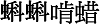 Unfortunately, company did not discover until after tens of thousands of signs had been printed that the phrase means "bite the wax tadpole" or "female horse stuffed with wax" depending on the dialect. Coke then researched 40,000 Chinese characters and found a close phonetic equivalent, "ko-kou-ko-le,"
  which can be loosely translated as "happiness in the mouth.
Unfortunately, company did not discover until after tens of thousands of signs had been printed that the phrase means "bite the wax tadpole" or "female horse stuffed with wax" depending on the dialect. Coke then researched 40,000 Chinese characters and found a close phonetic equivalent, "ko-kou-ko-le," which can be loosely translated as "happiness in the mouth.
The most common mistake made by companies
is not using the right translator for the job. It is a misconception that people
who are able to speak the language can translate well. Translation is a special
skill set and is not available to everyone. To do a good translation, you need
to have sound knowledge of both the languages and a little bit about the customs
and cultures too. Cultural sensitivity is also an important factor to consider
while translating. Language translation services should be offered only when
you have the writing skills, thorough knowledge of the language and an eagle's
eye when it comes to details.
Translation mistakes happen if you use
automatic translators like Google translate. These kind of automatic translators
are good for beginners, but not suitable for business standards. A professional
language translation service helps you with your advertising and marketing
materials. Professional translators have expertise in that particular language
and thus, have the skill and talent to translate perfectly. An education in
that particular language will teach you that common phrases in English that are
so perfect for the situations do not always have the same meaning in the other language.
The perfect English phrase might mean something totally irrelevant or have a
negative impact.
Translators too have their limitations,
when it comes to the particular field of expertise. For example, an expert
translator with a legal background might not have the expertise to translate
medical texts. Find the right translator for the kind of project. Language translation services usually have experts with experience in all fields like technical,
legal, engineering, accounting and medical etc. You need to be aware of the
terminology and the style of writing in that particular field.
Inadequate experience will definitely show
and the end result will look like something done by a foreign person to the target
audience. Always choose the keywords with care while translating. Straight
dictionary translations may not be perfect for all keywords. Local knowledge
about the colloquialism and abbreviations of a particular country might help
you with an appropriate translation.
While translating a foreign language, avoid
using literal translations. This is especially true with slogans. Word for word
translation does not usually work. A marketing slogan usually sets the tone for
the particular product. Based on the culture and customs of that particular
country, a slogan has to convey the message across clearly.
Product and company names too need a
careful scrutiny. The language translation services should take care of the
connotations or double meanings, some words have in certain languages. For
example, an advertisement by Clairol- they introduced a curling iron with a
name, "Mist Stick" in Germany. In German, Mist is also slang for
manure. This way poor knowledge of the language and minor errors can easily
become blunders and affect your sales in that country.
Thorough checking and rechecking of the
translated material is a must. It is very common to miss few words or phrases in
the first draft. This should be worked on until a natural sounding translation
is achieved. This can be further polished and fine-tuned to make it apt to the
people of that particular country. This perfection is achieved when more than
one person works on a particular translation.
A second mind looks at the draft
with a fresh perspective and can identify the errors missed by the first
translator. The translated material reaches a foreign audience where that
particular language is their native language and they can spot an error easily.
So, the language translation services need to look at an assignment with great
care and make sure that the final draft is accurate literally and appropriate
culturally.
Translation is a tedious job and needs
adequate time. Many people underestimate the time required and end up with work
filled with mistakes. Ideally, a 300-word document needs at least 1 1/2 to 2
hours and the technically difficult texts need more time. This is the time
required for the first draft. After this, allow ample time for the second
translator to check and make corrections. Some professional translators put
aside the finished work for some time and come back to it after some time. This
way, when they re-check the same document after a while, they can look at it in
a totally different perspective and look of the quality of expressions. This
time, any embarrassing words or words with different meanings can be identified.
Professional translation services give a
lot of importance for checking and re—checking a translated document. In this modern
age of innovations and technology, it is a big mistake not to avail the help of
proven editing and checking systems. This improves the overall quality of
translation and almost nullifies the chance of errors. Language translation services
should invest in these editing and proof reading systems for better quality of
work.
One simple mistake that can be easily
avoided is assuming that countries speaking the same language are similar in
all aspects. Every country has its own distinction when it comes to the
culture, style and way of living. If you are translating marketing material, be
doubly sure of the words and expressions used. The product and the selling
strategy might be looked at in a totally different way by the two countries.
Translation is an effective tool used
extensively by the companies to market their products globally. Social media
like Facebook and Twitter are now the best sources of global marketing.
Understanding the nuances of a language and their impact on the target society
makes the translation perfect. Avoid the usual mistakes and make a powerful
impression on the natives with your beautiful translation.

